
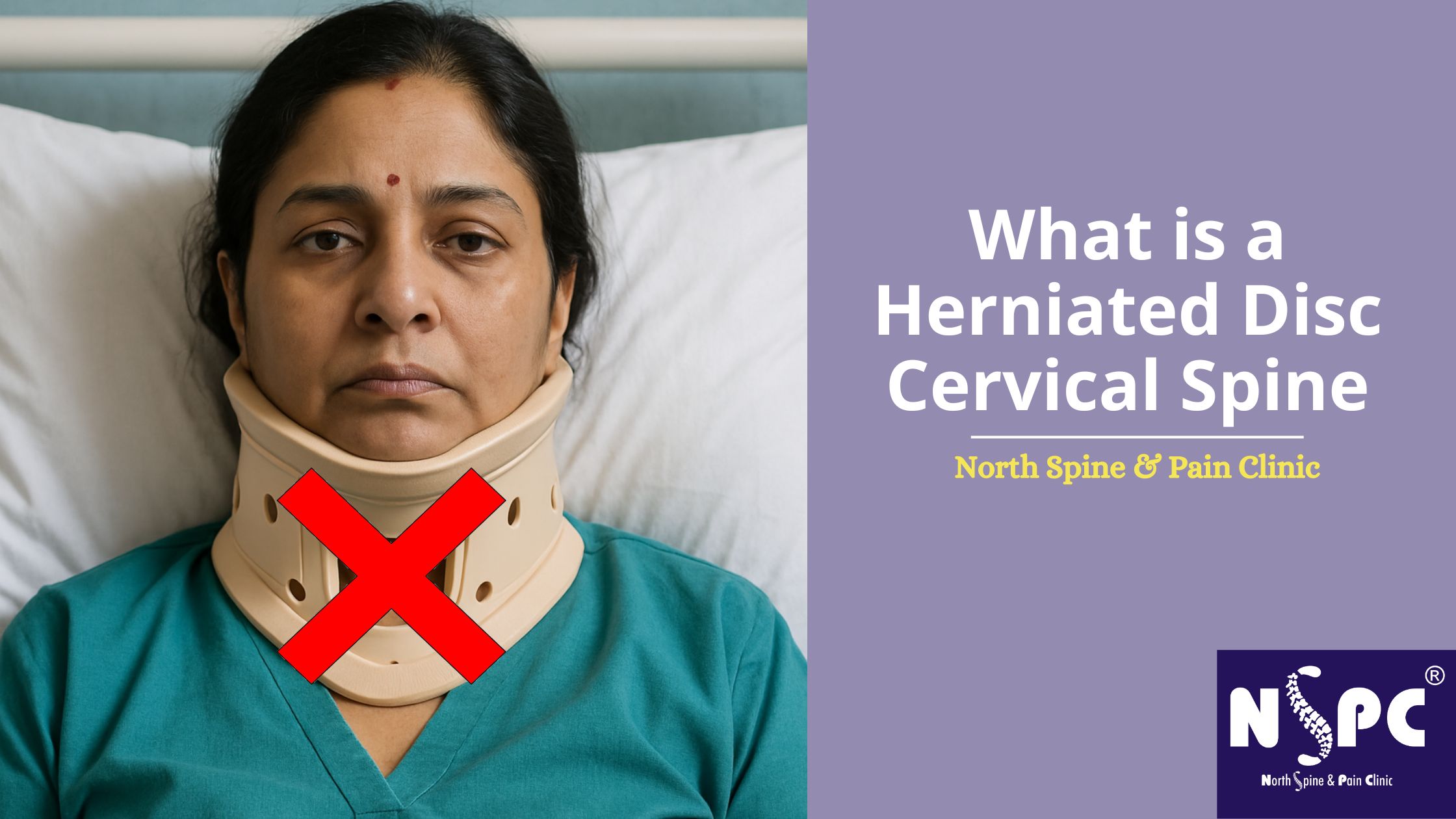
How to Identify and Treat a Herniated Disc in the Cervical Spine
💡 What is a Herniated Disc Cervical Spine?
The cervical spine refers to the neck portion of your spine. A herniated disc cervical spine happens when the soft inner gel of a spinal disc in your neck pushes out through a crack in the tougher outer layer. This condition can cause pain, numbness, or weakness that radiates into your shoulders, arms, or hands.
🔍 Herniated Disc cervical spine Causes
A herniated disc can be caused by:
- Age-related disc degeneration
- Sudden injuries or trauma
- Repetitive strain or poor posture
- Lifting heavy objects incorrectly
- Smoking, which reduces oxygen supply to discs
⚠ Herniated Disc cervical spine Symptoms (Cervical)
Some common herniated disc symptoms in the neck include:
- Neck pain and stiffness
- Tingling or numbness in arms or fingers
- Weakness in shoulders or hands
- Headaches originating from the neck
- Pain that worsens with movement
🧠 Herniated Disc cervical spine Types
There are several types of herniated discs, depending on where and how the disc bulges:
Protrusion – Disc bulges without rupture.
Extrusion – A portion of the disc gel escapes but remains connected to the disc.
Sequestration – A portion of the disc gel breaks away and floats freely.
Contained vs. Uncontained Herniation
📍 Herniated Disc Lumbar vs. Cervical
While this blog focuses on the cervical spine, it’s important to know:
Herniated disc lumbar affects the lower back and may cause leg pain (sciatica).
Cervical herniation affects the neck and upper limbs.
Both can be serious and require proper medical attention.
🩺 Herniated Disc cervical spine Treatment Options
Treatment depends on the severity. Common options include:
🔹 Non-Surgical:
• Physical therapy
• Pain relief medications
• Posture correction
• Cervical collars or neck braces
• Epidural steroid injections
• Non surgical, Minimally invasive procedures ( MIPSI treatments )
• Non surgical, Keyhole techniques ( MIPSI treatments )
• Lifestyle adjustments
• Cervical spine endoscopy treatments
🔹 Surgical:
If conservative treatments fail, surgery like discectomy or spinal fusion may be advised in less than 5% of patients.
🏥 When to See a Doctor
You should consult a spine specialist if:
- Pain persists for weeks
- There is loss of movement or strength
- Numbness becomes severe
- Daily activities are affected
A herniated disc in the cervical spine can be painful but is manageable with the right care and treatment. Early diagnosis, lifestyle changes, and medical help can help you avoid complications.
💬 Book Your Consultation Today
Visit the Cervical Treatment Specialist – Ex – AIIMS, Dr. G N Goyal for any non-surgical, minimally invasive, keyhole treatments in Delhi, Haryana or Punjab, at the nearest Cervical Spine Clinic – NSPC Clinic, and book your appointment now! Or Click on WhatsApp icon. Our experienced Cervical Specialist Doctor Near Me is here to support you on your road to recovery.
CONTACT US
Hear from our Happy Patients
You may please click here to know the pleasant experiences of our Cervical pain patients.