
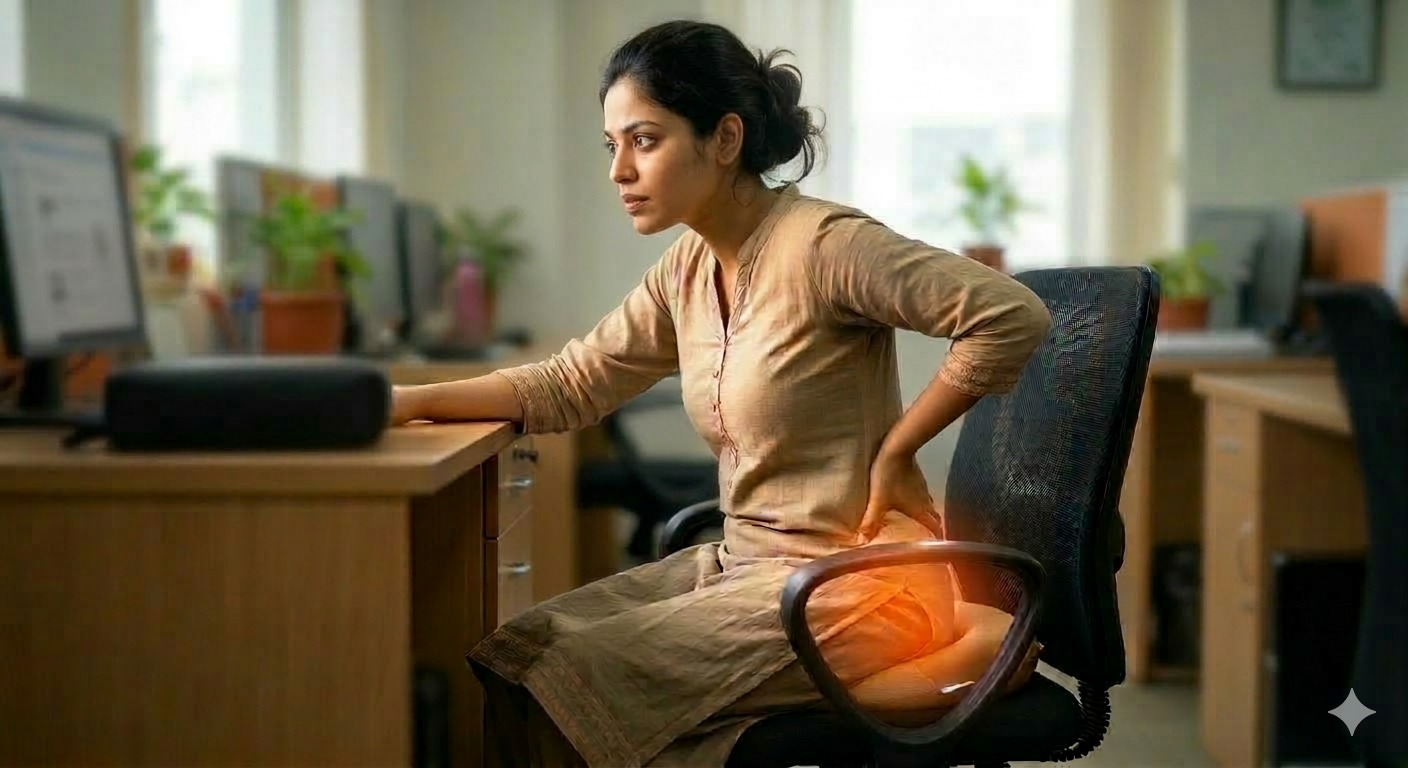
Tailbone Pain While Sitting? Get Advanced Coccyx Pain Treatment from Ex-AIIMS Specialist
If you are suffering from tailbone pain, coccyx pain while sitting, or pain at the bottom of the spine, expert treatment is available at NSPC Pain Clinic.
Dr. GN Goyal, Ex-AIIMS specialist, provides advanced non-surgical treatments for tailbone pain, including modern image-guided coccyx interventions and minimally invasive pain procedures.
Many patients who suffer from chronic sitting pain, coccyx injury or dislocation or sublaxation or persistent tailbone pain find long-lasting relief after proper treatment.
Suffering From Tailbone Pain?
Do you experience:
- Pain in tailbone while sitting
- Pain at the bottom of spine
- Coccyx pain after fall
- Tailbone pain after childbirth
- Pain while getting up from chair
You may be suffering from coccydynia (tailbone pain).
Early treatment can help prevent the pain from becoming chronic.
Consult Tailbone Pain Specialist
Dr GN Goyal – Ex AIIMS Specialist
NSPC Pain Clinic
- Advanced diagnosis
- Non-surgical treatment options
- Image-guided interventions
- Long-lasting pain relief
What is Tailbone Pain?
Tailbone pain, medically known as coccydynia, refers to pain in the coccyx (tailbone), the small triangular bone at the bottom of the backbone or spine. Tailbone is a part of sacrum bone, which connects the spine to the pelvic region and helps support the body while sitting.
People with tailbone pain often experience discomfort while sitting, getting up from a chair, bending, or during prolonged sitting. In many cases, even simple daily activities like driving, working at chair & desk, or sitting on a sofa can become painful.
Tailbone pain can significantly affect quality of life, but the good news is that most cases can be treated successfully with modern non-surgical treatments.
At NSPC Pain Clinic, Ex-AIIMS specialist Dr. GN Goyal provides advanced and highly effective treatments for tailbone pain using latest minimally invasive and non-surgical tailbone procedures.
Where is the Tailbone Located?
The tailbone (coccyx) is located at the very bottom of the spine, just below the sacrum.
It is made up of 3–5 small fused vertebrae and serves as an attachment point for several muscles, ligaments, and tendons of the pelvis.
Although small in size, the tailbone plays an important role in:
- Advanced diagnosis
- Non-surgical treatment options
- Image-guided interventions
- Long-lasting pain relief
Any injury, inflammation, or instability in the coccyx can cause significant pain.
Common Symptoms of Tailbone Pain
People suffering from coccyx pain may experience the following symptoms:
- Pain at the bottom of the spine
- Severe pain while sitting on hard surfaces
- Pain while getting up from sitting position
- Pain during prolonged sitting or driving
- Tenderness when pressing the tailbone area
- Pain during bowel movements
- Pain during cycling or exercise
- Pain during pregnancy or after delivery
Many patients complain that tailbone pain increases when leaning backward while sitting.
If these symptoms persist for more than a few weeks, it is advisable to consult a tailbone pain specialist for proper diagnosis and treatment.
Common Causes of Tailbone Pain
Tailbone pain can occur due to several reasons.
1. Fall or Injury
A fall directly on the buttocks is the most common cause of tailbone injury.
Examples include:
- Slipping on the floor
- Falling on stairs
- Sports injuries
- Road accidents
This may lead to tailbone swelling ( Coccydynia ), bruise, fracture, or ligament injury.
2. Prolonged Sitting
People who sit for long hours may develop chronic tailbone pain.
Common risk groups include:
- Office workers
- Drivers
- Students
- People working on computers
3. Childbirth (Post-Delivery Tailbone Pain)
Women may develop tailbone pain after childbirth due to:
- Pressure during delivery
- Coccyx displacement
- Ligament stretching
This is known as postpartum coccydynia.
4. Obesity or Excess Weight
Extra body weight increases pressure on the coccyx during sitting, leading to chronic coccyx pain.
5. Degeneration or Arthritis
Age-related changes in the coccyx joints may cause:
- Coccyx arthritis
- Joint inflammation
- Joint inflammation
6. Infection or Rare Tumors
Very rarely, infection or tumors near the coccyx may cause persistent tailbone pain.
Therefore, proper medical evaluation is important.
When Should You See a Doctor for Tailbone Pain?
You should consult a tailbone pain specialist if:
- Pain persists for more than 2–3 weeks
- Pain is severe while sitting
- Pain worsens over time
- Pain started after a fall or injury
- Pain interferes with daily life
Early diagnosis helps in faster recovery and better treatment outcomes.
Diagnosis of Tailbone Pain
At NSPC Pain Clinic, a detailed evaluation is done to identify the exact cause of tailbone pain.
Diagnosis may include
Clinical Examination
The doctor checks:
- Exact location of pain
- Tenderness around coccyx
- Movement of coccyx
Digital Rectal Examination (when needed)
Helps evaluate mobility of the coccyx joint.
X-Ray
Helps detect:
- Tailbone fracture
- Dislocation
- Coccyx deformity
MRI Scan
MRI helps detect:
- Soft tissue injury
- Ligament damage
- Infection
- Rare tumors
Accurate diagnosis ensures targeted treatment and faster relief.
Best Treatment Options for Tailbone Pain
Most patients improve with non-surgical treatment.
At NSPC Pain Clinic, Ex-AIIMS specialist Dr. GN Goyal provides advanced, evidence-based treatments for tailbone pain.
Treatment depends on the cause and severity of the pain.
Best Doctor for Tailbone Pain Treatment
If you are suffering from tailbone pain, coccyx pain while sitting, or chronic coccydynia, early treatment can help you recover faster.
Dr. GN Goyal (Ex-AIIMS Specialist) at NSPC Pain Clinic provides advanced and highly effective treatments for tailbone pain, spine pain, and chronic sitting pain.
With years of experience in minimally invasive procedures, he has successfully treated many – many patients suffering from persistent coccyx pain.
1. Lifestyle Modifications
Simple lifestyle changes can significantly reduce tailbone pain.
Recommended measures include:
- Avoid prolonged sitting
- Use a coccyx cushion (donut pillow)
- Maintain correct sitting posture
- Avoid hard surfaces
- Reduce body weight if overweight
2. Medications
Medicines may be prescribed to reduce pain and inflammation.
These may include:
- Anti-inflammatory medicines
- Muscle relaxants
- Pain relief medications
However, medicines alone do not treat the root cause in many patients.
3. Physiotherapy for Tailbone Pain may not help much
Specialized physiotherapy helps in:
- Strengthening pelvic muscles
- Reducing coccyx stress
- Improving posture
Exercises may include:
- Pelvic floor exercises
- Stretching exercises
- Posture correction therapy
4. Tailbone Intervention (Coccyx Intervention)
For patients with persistent pain, targeted interventions may provide excellent relief.
These include:
Coccyx Intervention
Helps reduce inflammation and pain.
Ganglion Impar Denervation
A specialized procedure targeting the pain nerve near the coccyx.
This procedure is:
- Minimally invasive
- Day-care procedure
- Highly effective in chronic tailbone pain
Many patients experience significant pain relief within days.
5. Radiofrequency Treatment (RF Ablation)
Radiofrequency Ablation (RF)
For chronic coccyx pain, Radiofrequency Ablation (RF) may be recommended.
This treatment:
- Targets pain-carrying nerves
- Modulates pain signals
- Provides long-lasting relief
RF procedures are minimally invasive and performed under imaging guidance.
6. Surgery for Tailbone Pain (Rare Cases)
Surgery is rarely required.
In very severe cases, coccygectomy (removal of tailbone) may be considered.
However, most patients improve with non-surgical treatments.
Why Choose NSPC Pain Clinic for Tailbone Pain Treatment?
NSPC Pain Clinic is one of the leading spine & pain clinics for the treatment of tailbone pain.
Patients from many cities visit the clinic for advanced pain management treatments.
Key advantages include:
- Treatment by Ex-AIIMS spine specialist Dr. GN Goyal
- Expertise in non-surgical treatments
- Advanced image-guided interventions
- Personalized treatment plans
- Focus on long-term pain relief
- Minimally invasive procedures
- High success rate in chronic pain conditions
Many patients who suffer from chronic tailbone pain, coccyx pain, or sitting pain find significant relief after treatment
How to Prevent Tailbone Pain
Simple precautions can reduce the risk of tailbone pain.
- Avoid prolonged sitting
- Maintain proper posture
- Use ergonomic seating
- Maintain healthy body weight
- Exercise regularly
These steps help keep the sacrum and coccyx healthy.
Book Consultation for Tailbone Pain Treatment
If you are experiencing:
- Pain while sitting
- Tailbone injury
- Chronic coccyx pain
- Pain after fall or childbirth
Consult Dr. GN Goyal at NSPC Pain Clinic for expert diagnosis and advanced treatment.
Early treatment can help you get relief from tailbone pain and return to normal life quickly.
North Spine & Pain Clinic, Delhi, India, with its branches (Contact) at Rohini, Ashok Vihar, Punjabi Bagh, Paschim Vihar (Delhi), Rohtak (Haryana) and Punjab is the most advanced SPINE AND PAIN CLINIC, for BEST Pain Management Centre near you without any major surgery and with minimally invasive, pinhole techniques. You can meet the best Tailbone pain specialist in Delhi at our centre for all the chronic pain problems. Pain management with latest keyhole techniques is our specialty.
Contact Us
Hear from Our Happy Patients
You may please click on the following link, to know the pleasant experiences of our Spine fracture patients.
FAQs
Is tailbone pain serious?
Most cases are not serious and improve with proper treatment.
However, persistent pain should be evaluated by a spine & pain specialist.
How long does tailbone pain last?
Mild tailbone injuries may heal within a few weeks, while chronic cases may require medical treatment.
Which doctor treats tailbone pain?
A spine pain specialist or pain management specialist is the best doctor for treating coccyx pain or coccydynia.
What is the main cause of tailbone pain?
The most common causes include fall on the buttocks, prolonged sitting, childbirth injury, coccyx inflammation, or ligament injury around the tailbone.
Why does my tailbone hurt when I sit?
When sitting, body weight puts pressure on the coccyx bone, which can worsen pain if there is inflammation, injury, or instability in the tailbone joint.
What is the best treatment for coccyx pain?
Treatment may include:
• Medication
• Physiotherapy
• Coccyx cushion
• Coccyx Intervention
• Ganglion impar denervation
• Radiofrequency pain treatment
These treatments are available at NSPC Pain Clinic.
Is tailbone pain permanent?
Most cases improve with proper treatment and lifestyle modifications. Chronic cases may require targeted interventions or advanced pain procedures.