
Understanding Spinal Vertebral Compression Fracture
A spinal vertebral compression fracture occurs when one of the bones of the spine (vertebra) collapses or becomes compressed. These fractures are commonly seen in elderly individuals with weak bones due to osteoporosis, but they can also occur after a fall, accident, or due to diseases like cancer affecting the spine.
When a vertebra collapses, it may cause sudden back pain, difficulty in standing or walking, and sometimes a change in posture such as a hunched back. In many cases, the pain can be severe and may significantly affect day-to-day activities.
Fortunately, modern spine care offers several effective treatment options that can relieve pain and help patients return to normal life. These treatments include non-surgical methods, minimally invasive procedures such as vertebroplasty and kyphoplasty.
Consult Ex – AIIMS Senior Specialist with 17+ Years Experience
Dr G N Goyal
Non-Surgical & Minimally Invasive Treatments for faster recovery
Non-Surgical Treatment for Compression Fracture
Many patients with spinal compression fractures improve with conservative treatments. The aim of non-surgical treatment is to reduce pain, stabilize the spine, and allow the fracture to heal naturally.
Pain relief
Pain control is one of the most important aspects of treatment. Doctors may prescribe pain-relieving medications and anti-inflammatory drugs to help reduce discomfort. Proper pain control allows patients to move more comfortably and prevents stiffness in the spine.
Rest and Activity Modification
In the initial phase after a fracture, short-term rest may be advised. However, prolonged bed rest is generally avoided because it can weaken muscles and slow recovery. Patients are encouraged to gradually return to light activities under medical guidance.
Back Brace Support
A spinal brace may sometimes be recommended to support the back while the fracture heals. The brace helps stabilize the spine, reduce movement at the fracture site, and decrease pain during daily activities.
Physiotherapy and Rehabilitation
Once the pain begins to improve, physiotherapy becomes an important part of recovery. Strengthening the back muscles and improving posture can help reduce stress on the spine and prevent further fractures. But at times it can be counter productive also, if started too early. It can further damage the already fractured vertebral bone.
Treatment of Osteoporosis
In many patients, compression fractures occur because of osteoporosis. Proper treatment of bone weakness with medications, calcium, vitamin D, and lifestyle changes is important to prevent future fractures.
Nonsurgical Vertebroplasty – Minimally Invasive Treatment
Non-surgical vertebroplasty is different from surgical vertebroplasty.
For patients whose pain does not improve with conservative treatment, vertebroplasty can be an effective minimally invasive procedure.
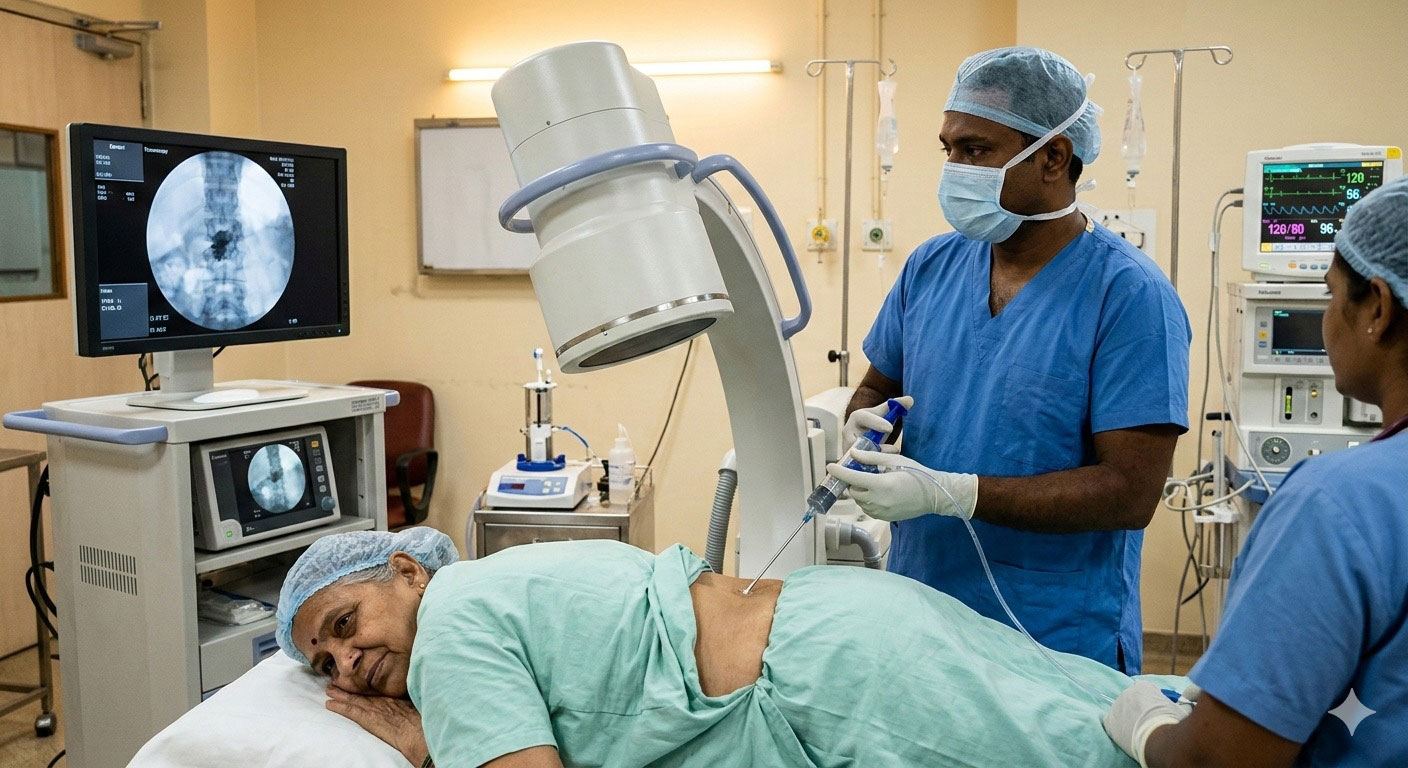
In vertebroplasty, a special medical bone cement is injected into the fractured vertebra using a thin needle under imaging guidance. The cement quickly hardens inside the bone, stabilizing the fracture and reducing painful movement.
Benefits of Vertebroplasty
- Rapid pain relief in many patients
- Stabilization of the fractured vertebra
- Nonsurgical, Minimally invasive procedure
- Usually performed under local anesthesia
- Short hospital stay or same-day discharge
- Faster return to normal activities
Because vertebroplasty does not require large surgical cuts, it is particularly helpful for elderly patients or those who may not tolerate major spine surgery.
Nonsurgical Kyphoplasty – Restoring Height of the Vertebra
Nonsurgical kyphoplasty is different from surgical kyphoplasty.
Another advanced minimally invasive treatment for compression fractures is kyphoplasty.
In this procedure, a small balloon is first inserted into the fractured vertebra and gently inflated. This helps create space and may partially restore the height of the collapsed vertebra. After this, bone cement is injected into the space to stabilize the bone.
Advantages of Kyphoplasty
- Relief from severe back pain
- Stabilization of the fractured bone
- Possible restoration of vertebral height
- Improvement in spinal alignment
- Minimally invasive with quicker recovery
Nonsurgical Kyphoplasty can be particularly useful when there is significant collapse of the vertebra and deformity of the spine.
Choosing the Right Treatment
The best treatment option depends on several factors, including:
- Age of the patient
- Cause of the fracture
- Severity of pain
- Degree of vertebral collapse
- Overall health condition of the patient
A detailed clinical evaluation along with imaging tests such as X-rays, MRI, or CT scans helps the spine specialist determine the most suitable treatment plan.
Difference Between Vertebroplasty and Kyphoplasty
Both vertebroplasty and kyphoplasty are minimally invasive procedures used to treat spinal compression fractures.
However, there are some differences:
| Vertebroplasty | Kyphoplasty |
|---|---|
| Cement injected directly into vertebra | Balloon used before cement injection |
| Stabilizes fracture | Stabilizes fracture and may restore height |
| Short procedure time | Slightly longer procedure |
| Effective pain relief | Pain relief + possible spinal alignment improvement |
The choice between these procedures depends on the condition of the vertebra and the patient’s clinical situation.
Consult Ex – AIIMS Senior Specialist with 17+ Years Experience
Dr G N Goyal
Non-Surgical & Minimally Invasive Treatments for faster recovery
Benefits of Non-surgical Minimally-Invasive Spine Fracture Treatment
Modern nonsurgical minimally invasive spine procedures have significantly improved the treatment of spinal fractures.
Advantages include:
- Smaller needle entry instead of large surgical incision
- Less damage to surrounding tissues
- Reduced hospital stay
- Faster recovery
- Early mobilization of the patient
- Lower surgical risk in elderly patients
These procedures have helped many patients regain mobility and reduce severe back pain.
Expert Spine Care at NSPC Spine Clinic
Proper diagnosis and treatment of spinal compression fractures require experience and expertise in spine care. NSPC Spine Clinic is known for providing advanced and patient-focused treatment for various spine disorders, including spinal vertebral compression fractures.
The clinic is led by Dr. GN Goyal, an experienced pain & spine specialist and Ex-AIIMS specialist, who has been treating complex spine conditions for many years. With extensive experience in vertebroplasty, kyphoplasty, and non-surgical spine treatments, Dr. Goyal has helped many patients achieve significant pain relief and improved quality of life.
At NSPC Spine Clinic, patients receive a comprehensive evaluation and individualized treatment plan. The focus is always on providing the most appropriate treatment — whether non-surgical management or minimally invasive procedures — to ensure the best possible outcome for every patient.
When to Seek Expert Medical Evaluation
Medical assessment is important if a person experiences:
- Sudden back pain after a fall or minor injury
- Persistent mid-back or lower back pain
- Progressive loss of height
- Development of spinal curvature
- Difficulty standing or walking due to pain
Early evaluation helps identify the cause and prevent further spinal damage.
When to Consult a Spine Specialist @ North Spine & Pain Clinic
You should consult a spine specialist if you experience:
- Sudden severe back pain after a fall or minor injury
- Persistent back pain that does not improve with rest
- Difficulty standing or walking due to back pain
- Loss of height or developing a stooped posture
- Known osteoporosis with new onset back pain
Early diagnosis and proper treatment can prevent complications and help patients recover faster.
North Spine & Pain Clinic, Delhi, India, with its branches at Rohini, Ashok Vihar, Punjabi Bagh, Paschim Vihar (New Delhi) and Rohtak (Haryana) & Punjab is the best spine clinic among many spinal hospital in India, to treat spine fractures without any major surgery and with nonsurgical, minimally invasive, pinhole techniques. We are proud to have best spine doctor in Delhi to take care of all types of Spinal fracture and Vertebral fracture.
Contact Us
Hear from Our Happy Patients
You may please click on the following link, to know the pleasant experiences of our Spine fracture patients.
FAQs
What is the best treatment for spinal compression fracture?
The best treatment depends on the severity of the fracture. Many patients improve with non-surgical treatment, while others may benefit from minimally invasive procedures such as vertebroplasty or kyphoplasty.
How long does a compression fracture take to heal?
Most compression fractures may take about 6–12 weeks to heal with proper treatment, although pain relief can occur much earlier with appropriate management.
Is vertebroplasty a surgery?
Vertebroplasty is a minimally invasive spine procedure in which bone cement is injected into the fractured vertebra to stabilize it and relieve pain.
What is the difference between vertebroplasty and kyphoplasty?
Both procedures stabilize spinal fractures using bone cement. In kyphoplasty, a balloon is first inserted to create space and sometimes restore vertebral height before cement injection.
Is vertebroplasty safe?
When performed by an experienced spine specialist, vertebroplasty is generally considered a safe and effective treatment for painful compression fractures.